
Holbrook Fuze Pickleball Paddle Review: Smart Foam Upgrade With Dual Density
The Holbrook Fuze has officially arrived, marking Holbrook’s entry into the foam core paddle market, and it’s a meaningful step forward from the Arma.
After 10-15 hours on court with the 16mm hybrid and elongated models, here’s the full breakdown of how it plays, what makes it unique, and whether the $230 price tag makes sense in today’s paddle market.
The Basics
The Holbrook Fuze lineup includes:
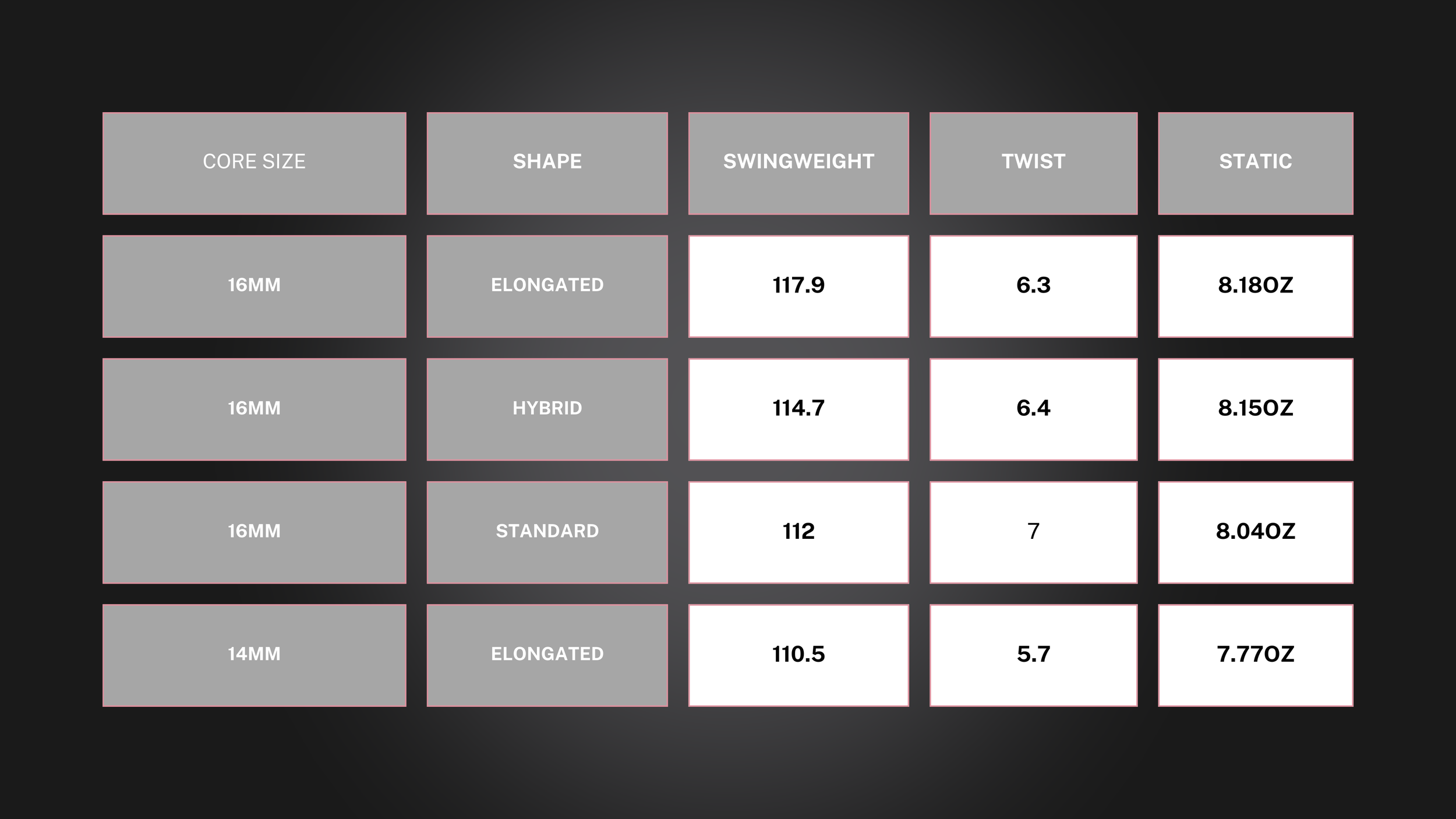
16mm Elongated
16mm Hybrid
16mm Standard
14mm Elongated
All feature:
5.5” handle length
4.125” grip circumference
Carbon fiber face with an aramid (Kevlar) layer
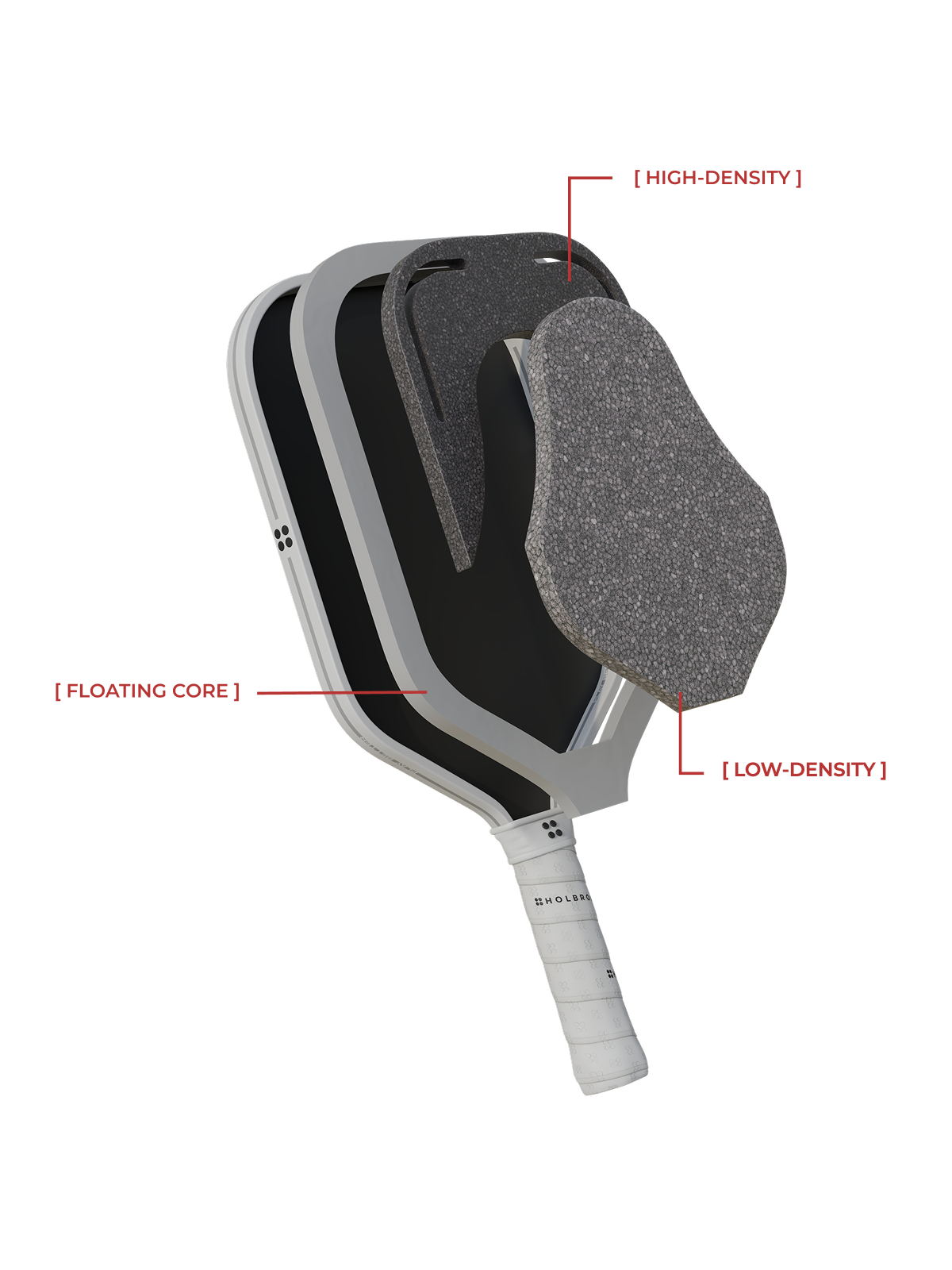
New dual density floating foam core
My primary test specs:
16mm Elongated
Swing Weight: 117.9
Twist Weight: 6.3
16mm Hybrid
Swing Weight: 114.7
Twist Weight: 6.4
Retail price: $230
Discount: Use code PickleballBlast to bring it just over $200.
The Core: Where the Fuze Stands Out
The Fuze utilizes a similar approach of the arma but with foam instead of honeycomb cores, marking a major upgrade in durability.
The Fuze features:
Higher density foam toward the top
Lower density foam through the center and bottom
EVA perimeter wrap
Corner voids to reduce swing weight
It’s essentially a next-generation evolution of Holbrook’s dual-density concept, now using foam instead of honeycomb polypropylene.
And on court? It works.
The paddle feels comfortable, slightly springy, and easy to play well with. The power sits in the lower to mid tier of the power category, usable and linear, not explosive. The feel lands somewhere between dense and hollow, leaning slightly softer than many recent foam paddles.
Shape Breakdown: Which One Should You Choose?
14mm Elongated
Fastest in hand
Stiffer feel
Less forgiving
16mm Hybrid
Slightly quicker than elongated
Very balanced
My personal preference
16mm Elongated
Good reach
Manageable swing weight
Plays well stock
Standard
Highest stability
Twist weight around 7
Most forgiving option
There’s a strong argument that Holbrook nailed the lineup versatility here.
Durability Improvements
Durability was a real concern with the Arma.
The Fuze’s foam core appears to address that issue. So far, after 10–15 hours, there are no structural concerns for me, and foam seems to be a better match for this dual density concept.
Long term durability will require more time, but early signs are encouraging.
The Value Question
Here’s where things get interesting. The Fuze launches at $230, in a market increasingly focused on grit longevity and value innovation. The Fuze uses a traditional carbon fiber face. Spin is good, normal, but like most raw carbon paddles, the surface will degrade over time. At this price point, and at this time, comparisons are inevitable. That doesn’t make the Fuze a bad paddle. Not at all. It’s very playable. Very approachable. Very balanced.
But in a moment where surface longevity is becoming a headline feature across the industry, it raises the question: Is playability enough at $230?
For many players, the answer will be yes. For others prioritizing long lasting grit or maximum power ceiling, there may be alternatives worth considering. And even if neither of those are important to you, the price point is still on the higher end when we are blessed with an incredibly large variety of great paddles currently on the market.
Final Verdict
Holbrook nailed the playability.
The foam execution is a clear step forward from the Arma. The feel is comfortable and predictable. The shape options cover a wide range of players. The only real tension is price versus innovation in today’s paddle landscape. If you value approachable power, smooth feel, and lineup versatility, the Fuze makes a lot of sense.
It may not chase the loudest headline feature but it delivers where it counts on court. And for many players, that’s more than enough.
